
Informational Material
Frequently Asked Questions (FAQ)
How is climate change linked to natural disasters?
The climate crisis is leading to an increase in the frequency and intensity of extreme weather events, such as heatwaves and heavy rainfall.
This increases the likelihood of climate-related hazards occurring, such as forest fires and floods, which, if they escalate, can lead to disasters.
The “AEGIS” programme for the modernisation of Civil Protection, with the support of the RRF, aims to strengthen the country’s resilience against the adverse impacts of the climate crisis.
How is Civil Protection linked to climate change?
Civil Protection:
Is called upon to address and mitigate the impacts of the climate crisis, namely increasingly frequent and intense climate-related hazards, such as forest fires and floods.
By aiming to strengthen prevention and preparedness, it contributes to the adoption of numerous measures for adaptation to current climate conditions.
It enhances society’s resilience, namely its capacity to recover, by reducing its vulnerability to extreme events.
The “AEGIS” programme strengthens Civil Protection and adaptation to the new conditions, thereby making Greece more resilient to the impacts of the climate crisis.
What is the “AEGIS” Programme?
The “AEGIS” Programme is the largest Civil Protection modernisation programme in Greece. It is implemented by the Ministry of Climate Crisis and Civil Protection. It is funded through resources from the Recovery and Resilience Facility, RRF, the European Investment Bank and the Partnership Agreement for Regional Development 2021–2027.
It constitutes a comprehensive national effort to strengthen the Civil Protection Mechanism. This is achieved through major investments in modern equipment and assets, infrastructure and technology, as well as in the training of human resources.
Its objective is to ensure the more effective prevention and management of crises, such as natural disasters. It also aims to strengthen resilience against the impacts of the climate crisis.
What are the main pillars of “AEGIS”?
The investments and actions implemented through the “AEGIS” Programme concern four intervention pillars:
- Upgrading of infrastructure and facilities
- Warning systems and prevention assets
- Equipment and assets for support and coordination
- Operational equipment and response assets
What is the Recovery and Resilience Facility, RRF?
The Recovery and Resilience Facility, RRF, is a European Union funding instrument. It was created after the COVID-19 pandemic. Its aim is to support the recovery of Member States. It also aims to strengthen their resilience against future crises, including economic, environmental and other types of crises.
Through the RRF, investments and reforms are funded in sectors such as the green transition, digital development, infrastructure, health, education and entrepreneurship.
What is “Greece 2.0” and how is it linked to the RRF?
Greece utilises the resources of the Recovery and Resilience Facility through the National Recovery and Resilience Plan “Greece 2.0”.
“Greece 2.0” is a programme of reforms and investments. It aims to modernise the economy and the state. It places emphasis on green growth, the digital transition, the strengthening of employment and social cohesion, and the transformation of the Greek economy.
What actions does “Greece 2.0” include for Civil Protection?
The “Greece 2.0” actions for Civil Protection are the following:
- National Disaster Risk Management Strategy
- Innovative monitoring and management system
- Aerial assets for crisis management
- Equipment for the suppression, prevention and response to forest fires
Each “Greece 2.0” Action includes a set of projects that have been incorporated into the “AEGIS” Programme, thereby making the RRF a key funding instrument for the modernisation of the Civil Protection Mechanism in
What does the National Disaster Risk Management Strategy concern?
This “Greece 2.0” Action strengthens the national framework for managing risks related to natural and other disasters, so that the country becomes more resilient in the face of contemporary challenges.
It equips Civil Protection with modern facilities to cover operational and training needs, as well as with state-of-the-art assets for operational command and coordination, such as ISR aircraft — Intelligence, Surveillance and Reconnaissance aircraft.
What does the Development of an Innovative Monitoring and Management System include?
It is an integrated investment in intelligent monitoring and early warning systems. These systems equip Civil Protection with modern tools for effective management and immediate intervention.
The Action includes meteorological stations, radar systems, and fire detection and firefighting systems for the protection of archaeological sites and cultural monuments.
What aerial assets is the country acquiring with the support of the RRF?
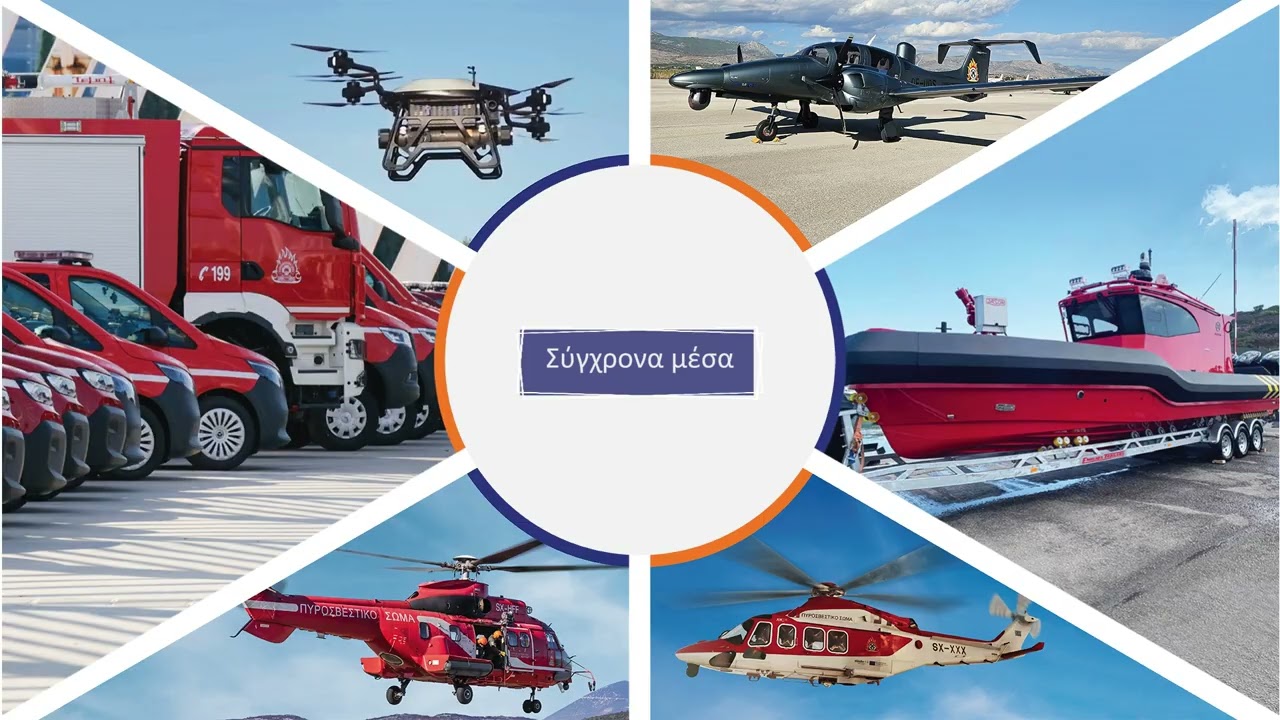
In addition to the 3 state-of-the-art Diamond 62 MPP ISR aircraft, which operate as Aerial Operations, Monitoring and Data Recording Centres, Greece is acquiring:
- 2 H215 firefighting helicopters
- 3 Leonardo AW139 helicopters
- A large number of drones
These are modern aerial assets covering a wide range of operations: from search and rescue to personnel transport, aerial surveillance, support for forest firefighting and medical missions.
How do drones support the work of Civil Protection?
Drones support the work of Civil Protection mainly through the immediate and accurate real-time information they can provide. They are used for:
- Surveillance of high-risk areas
- Early detection of fires
- Assessment of the extent of a disaster
- Support for search and rescue operations
- Transport of small payloads, such as medical supplies, to hard-to-reach areas.
What are Bailey bridges?
They are temporary bridging structures that can be transported and installed quickly and easily in areas affected by floods, as well as by other natural disasters such as earthquakes. Their purpose is to facilitate the work of Civil Protection bodies and the movement of citizens.
With funding from the RRF, the country is acquiring 23 mobile Bailey-type bridges, which will be distributed across the thirteen Regions.